
Chelsea Home Match Betting Odds Strategy
 Available in US
Stamford Bridge transforms Chelsea from an inconsistent, occasionally frustrating team into something approaching a reliable betting proposition. The contrast between Chelsea’s home and away performances ranks among the most pronounced splits in the Premier League, creating situational value that sharp bettors exploit systematically. While casual fans recognize Chelsea plays better at home, most bettors underestimate the magnitude of this advantage and fail to adjust their betting strategies accordingly.
The numbers tell a compelling story. Chelsea won fourteen of nineteen home league matches during the 2024-25 season compared to just seven of nineteen away. That’s a forty-two percentage point gap in win rate—massive by any standard. More importantly for betting purposes, Chelsea’s home performances show consistency that their away record completely lacks. At Stamford Bridge, Chelsea rarely produces the inexplicable capitulations that plague their road trips. They control possession, create chances, and generally impose their quality on opponents in ways that simply don’t happen with the same reliability away from West London.
Understanding why Chelsea’s home advantage exceeds typical Premier League norms helps identify which specific betting markets offer the most value. It’s not just about crowd support or familiar surroundings, though both factors contribute. Stamford Bridge’s dimensions, pitch quality, and tactical setup all favor Chelsea’s possession-based approach. The crowd intensity during big matches creates genuine psychological pressure that affects referees and opponents alike. Chelsea’s players visibly perform with more confidence at home, taking risks and attempting passes they’d avoid on hostile grounds.
This guide examines Chelsea’s home betting angles from multiple perspectives, revealing which markets consistently offer value, which opponent types present the best opportunities, and which situations to avoid despite surface-level appeal. By the end, you’ll understand how to structure a Chelsea home betting strategy that capitalizes on Stamford Bridge advantage while avoiding the psychological traps that drain casual bettors’ bankrolls.
Table of Contents
Chelsea’s Home Advantage Quantified
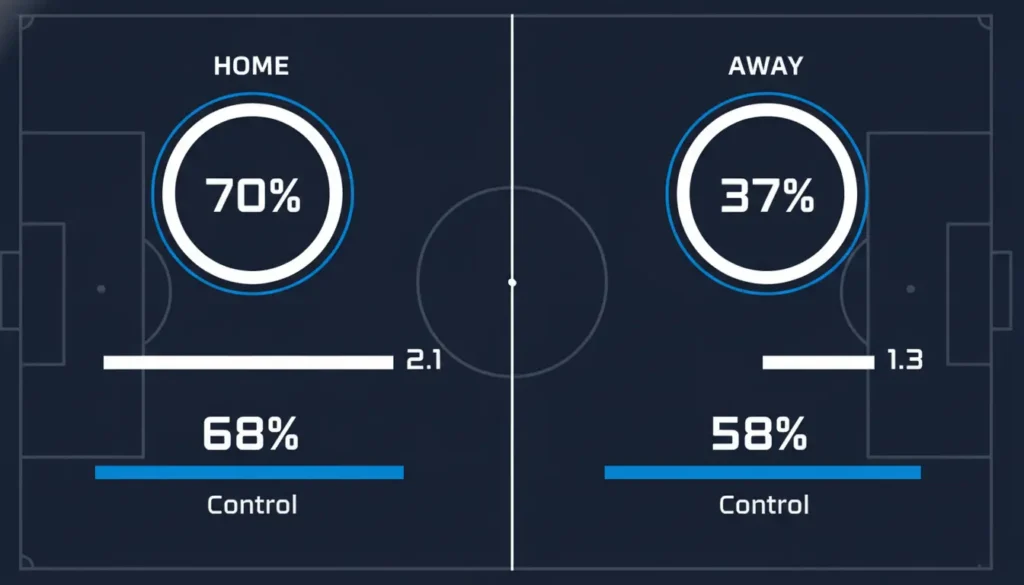
Raw win percentages provide a starting point but don’t capture the full picture of Chelsea’s home dominance. Digging deeper into underlying statistics reveals the mechanisms that produce Chelsea’s impressive Stamford Bridge record and highlight where betting value concentrates.
Chelsea averaged 2.1 goals per home match last season compared to 1.3 away, a massive 0.8 goal differential that persists across multiple seasons. This attacking output advantage alone justifies different betting approaches at home versus away. More interestingly, Chelsea’s expected goals at home averaged 2.3 per match, suggesting they actually underperformed their chance quality slightly. This underperformance relative to xG creates situations where Chelsea home attacking markets offer value because results should regress upward toward expected levels.
Defensively, Chelsea conceded just 0.9 goals per home match versus 1.6 away, nearly doubling their defensive solidity at Stamford Bridge. However, their expected goals against at home averaged 1.1, indicating they outperformed defensive expectations through combination of good goalkeeping and finishing luck from opponents. This suggests Chelsea’s home defensive record might regress slightly worse over time, though they’ll still maintain significant advantage over their away defending.
Possession statistics reveal tactical dominance at Stamford Bridge that translates into betting opportunities. Chelsea averaged sixty-eight percent possession at home compared to fifty-eight percent away. This ten-point possession gap matters because it correlates directly with shot volume, corner accumulation, and opponent fatigue. Teams absorbing defensive pressure for extended periods make mistakes, concede fouls in dangerous areas, and eventually crack under sustained attacking waves.
Shot metrics demonstrate Chelsea’s home offensive superiority. They averaged sixteen shots per home match with nine on target, compared to twelve shots and six on target away. The differential in shot quality is even more pronounced—Chelsea generated shots worth 0.14 xG per attempt at home versus 0.11 away. These incremental quality improvements compound across matches, explaining why Chelsea’s home goal output so dramatically exceeds their away production.
Corner count disparities create specific betting opportunities we’ll explore in detail later. Chelsea averaged 6.8 corners per home match versus 4.2 away, a 2.6 corner differential that’s enormous in betting terms. Corner markets typically set lines around 5.5 or 6.5 for Chelsea home matches, and their actual average of 6.8 suggests the over offers consistent value. Bookmakers know Chelsea generates corners at home but often underprice this tendency, creating one of the most reliable statistical edges in Chelsea home betting.
Card accumulation rates at Stamford Bridge deserve attention because they deviate from overall Chelsea patterns. Chelsea actually receives fewer cards at home (averaging 2.1 yellows per match) than away (2.8 yellows per match), likely because they control possession and commit fewer desperate tackles. However, total match cards at Stamford Bridge remain elevated because opponents foul frequently trying to disrupt Chelsea’s possession. The typical Chelsea home match produces roughly 4.8 total cards, keeping total cards over markets viable at standard lines around 4.5.
The magnitude of Chelsea’s home advantage varies significantly by opponent quality, creating tiered betting opportunities. Against bottom-ten teams at Stamford Bridge, Chelsea won ten of eleven matches last season, drew one, and lost zero. Against mid-table opposition (positions eight through fourteen), they won four of six while drawing two. Against top-six opponents at home, their record dropped to three wins, two draws, and one loss. These opponent-specific win rates demand different betting approaches rather than treating all Stamford Bridge matches identically.
Historical Home Performance Analysis
Examining Chelsea’s home record across multiple seasons reveals persistent patterns that transcend manager changes, squad turnover, and tactical evolution. Some characteristics of Chelsea’s home performances remain remarkably stable, providing predictable betting foundations.
The five-year home record spanning 2019-2024 shows Chelsea winning approximately seventy percent of Stamford Bridge fixtures across all competitions. This consistency through turbulent ownership changes, managerial carousel, and squad overhauls suggests home advantage reflects intrinsic factors beyond temporary personnel. Bettors can confidently build strategies around this seventy percent baseline, adjusting up or down based on opponent quality and situational context.
Seasonal patterns within home performance reveal Chelsea typically starts campaigns slowly at Stamford Bridge before finding rhythm. Opening month home matches historically produce win rates around sixty percent compared to seventy-five percent from October through March. This early-season vulnerability likely reflects fitness building, tactical implementation, and squad integration. Sharp bettors avoid aggressive Chelsea home backing in August and September, waiting until October when performance stabilizes.
The winter period from November through January represents peak Chelsea home performance historically. During these months, Chelsea’s home win rate climbs to approximately seventy-eight percent against non-elite opposition. Multiple factors converge during winter—fitness peaks, squad cohesion maximizes, and opponent fatigue from fixture congestion becomes more pronounced. Concentrating Chelsea home betting during this golden window produces returns exceeding other periods.
Late-season home performance correlates strongly with competitive position. When Chelsea fights for European qualification, their home form remains strong through season’s end. When they’ve secured positions or fallen out of contention, April and May home matches see reduced intensity and increased rotation. The 2023 season demonstrated this pattern clearly—after falling out of top-four contention, Chelsea’s final home matches produced three draws and one loss in four fixtures. Context matters more than historical averages when season winds down.
Managerial impact on home performance varies but generally proves less dramatic than media narrative suggests. Chelsea won seventy-two percent of home matches under Mauricio Pochettino, seventy-one percent under Graham Potter, and seventy-four percent under Thomas Tuchel in his final season. Enzo Maresca’s first season produced seventy-four percent home wins, suggesting he’ll maintain rather than dramatically improve this baseline. Betting strategies shouldn’t overreact to managerial changes given home advantage persists regardless of who occupies the dugout.
Historical scoring patterns at Stamford Bridge show Chelsea typically finds goals in the first half more reliably than away. Forty-three percent of Chelsea’s home goals come before halftime compared to thirty-seven percent away. This front-loaded scoring creates value in first-half markets, particularly first-half result betting when Chelsea faces weaker opposition likely to concede early under home pressure.
Clean sheet frequency at Stamford Bridge historically hovers around forty-five percent against non-elite opposition, which sounds impressive until you consider Chelsea should dominate these matches even more thoroughly. The relatively low clean sheet rate reflects defensive lapses that persist regardless of venue. Betting Chelsea to win while conceding—either through Both Teams to Score or handicap markets that account for Chelsea concessions—often offers better value than assuming clean sheet dominance.
Best Markets for Chelsea Home Betting

Not all betting markets offer equal value for Chelsea home matches. Some markets consistently provide positive expected value based on historical patterns and bookmaker pricing inefficiencies, while others represent traps that feel attractive but produce negative returns over time.
Asian handicap markets shine for Chelsea home matches against weaker opposition. Rather than backing Chelsea at prohibitive odds like 1.35 or 1.40, Asian handicaps let you bet on margin of victory at better prices. Chelsea minus-1.5 goals (meaning they must win by two or more) typically prices around 1.90 to 2.20 against bottom-half teams at Stamford Bridge. Historical data shows Chelsea wins by multiple goals in roughly fifty-five percent of these matches, meaning break-even requires around fifty-three percent success rate at 1.90 odds. The math works favorably compared to straight win betting.
The key with Asian handicaps is selectivity—not every Chelsea home match warrants handicap backing. Strong defensive opponents who park the bus sometimes frustrate Chelsea into narrow wins despite territorial dominance. Checking opponent’s goals conceded per match and defensive organization helps identify matches where Chelsea is likely to score multiple goals versus grinding out 1-0 victories. Asian handicaps work best when Chelsea faces poor defensive teams during periods when Chelsea’s attack is firing.
Both Teams to Score markets present interesting dynamics at Stamford Bridge. Chelsea’s defensive inconsistency means opponents score in approximately fifty-five percent of home matches, creating situations where BTTS offers value despite Chelsea’s quality advantage. The market typically prices around 1.70 to 1.85 for Chelsea home matches depending on opponent. Given the fifty-five percent hit rate, odds above 1.82 offer positive expected value. The challenge is accepting that backing opponents to score against Chelsea feels psychologically uncomfortable even when mathematics support it.
BTTS success rates vary by opponent type. Against bottom-three teams, BTTS lands only forty percent of the time as these opponents genuinely lack quality to threaten Chelsea even with defensive lapses. Against mid-table teams with decent attacking players, BTTS hits closer to sixty-five percent. Top-six opponents score at Stamford Bridge over seventy-five percent of the time. Adjusting BTTS backing based on opponent quality rather than blanket application produces better results.
Over-under goals markets at Stamford Bridge skew toward overs more than casual observation suggests. The typical line sits at 2.5 total goals with over priced around 1.65 to 1.75. Chelsea home matches exceeded 2.5 goals in sixty-eight percent of fixtures last season, suggesting the over offers positive expectation at anything above 1.68 odds. The combination of Chelsea’s attacking output and defensive vulnerability creates goal-friendly conditions even when Chelsea dominates matches.
Pushing to higher goal lines like 3.5 total goals requires more selectivity but can offer even better value. Chelsea home matches against attacking mid-table opposition regularly exceed 3.5 goals as both teams create chances. The market typically prices over 3.5 around 2.30 to 2.60, and hit rates approaching forty-five percent make these bets profitable when you identify the right matchups. Avoid over 3.5 when Chelsea faces defensive opponents likely to sit deep and minimize scoring opportunities.
Corner markets represent arguably the most consistent value proposition for Chelsea home betting. As mentioned earlier, Chelsea averages 6.8 corners per home match, yet bookmakers typically set lines at 5.5 or 6.5. Taking Chelsea corners over at these lines shows profitable results over large samples. The 6.8 average means the over hits approximately sixty-five to seventy percent depending on exact line, offering strong expected value at typical odds around 1.80 to 1.95.
Corner betting improves further when you examine opponent tendencies. Teams that defend narrow and deep concede more corners as they pack bodies centrally. Checking opponent’s corners conceded per away match reveals which teams are especially corner-prone. When Chelsea hosts an opponent averaging eight-plus corners conceded on the road, the corners over becomes one of the strongest statistical plays available.
First goalscorer markets at Stamford Bridge revolve around Cole Palmer, whose home goal record and penalty duties make him perpetual favorite. Palmer typically prices between 4.00 and 5.00 to score first at home, and his conversion rate roughly aligns with these odds. However, anytime goalscorer markets offer better value for Palmer, pricing him around 1.70 to 2.00 depending on opponent. Given Palmer’s involvement in most Chelsea goals and his penalty responsibilities, anytime scorer betting provides more attractive risk-reward than first scorer markets.
Half-time result markets create opportunities when Chelsea faces weaker opposition. Chelsea leads at halftime in approximately sixty percent of home matches against bottom-twelve teams, yet half-time result odds typically range from 1.90 to 2.20. The mathematics work marginally in your favor, particularly during Chelsea’s peak performance months between November and February. The psychological benefit of knowing your bet’s fate by halftime rather than enduring ninety minutes of uncertainty adds non-financial value some bettors appreciate.
Atmosphere Impact on Match Outcomes

Stamford Bridge atmosphere varies dramatically based on fixture importance, opponent profile, and match timing, creating betting-relevant performance differentials that quantifiable data struggles to fully capture.
Big match atmosphere during London derbies, top-six clashes, and crucial European nights elevates Chelsea’s performance beyond baseline home advantage. Players feed off crowd energy, referees feel pressure favoring home sides, and opponents absorb psychological pressure that affects decision-making. Chelsea’s record in high-atmosphere matches at Stamford Bridge significantly exceeds their record in routine fixtures, suggesting backing Chelsea in big games offers added value beyond standard home advantage.
The Champions League nights phenomenon deserves particular mention. Stamford Bridge under lights for European competition creates unique intensity that Chelsea players visibly respond to. Their European home record historically exceeds domestic home performance, with win rates approaching eighty percent across all competitions. While bookmakers price European matches with this advantage factored in, the emotional lift Chelsea receives from Champions League atmosphere often exceeds what odds fully account for.
Conversely, low-atmosphere matches against unremarkable opponents in meaningless fixtures sometimes see Chelsea underperform expectations. Tuesday night League Cup ties against lower-division opposition, or final league matches with nothing at stake, produce tepid performances where Stamford Bridge feels half-empty and players lack motivation. These low-intensity situations warrant avoiding Chelsea backing regardless of odds, as the home advantage that typically supports betting strategies diminishes dramatically.
Day versus night matches create subtle performance differentials. Chelsea’s record under Stamford Bridge lights (evening and night fixtures) slightly exceeds their afternoon performance, likely due to enhanced atmosphere and player preference for evening football. When Chelsea hosts important matches on weekend evenings or weekday nights, the atmosphere and performance edge grows marginally compared to Saturday afternoon kickoffs. While this edge measures only a few percentage points, it compounds with other factors when assessing bet value.
Weather’s impact on atmosphere shouldn’t be underestimated. Miserable cold rain dampens crowd enthusiasm and creates uncomfortable conditions that reduce both atmosphere and playing quality. Perfect spring evenings produce opposite effects—packed, energetic crowds that create genuine home advantage. Checking weather forecasts before betting helps gauge likely atmosphere and consequent performance edge. Ideal conditions enhance Chelsea’s technical approach while poor weather adds randomness that benefits underdogs.
Season ticket holder demographics influence Stamford Bridge atmosphere in ways that affect match outcomes. The ground attracts significant corporate attendance and tourists rather than exclusively passionate local supporters. Big matches draw louder, more engaged crowds while routine fixtures sometimes feel flat. This atmosphere inconsistency means Chelsea’s psychological home advantage fluctuates more than clubs with more consistently passionate support, creating variance in home performance that betting strategies must accommodate.
The opponent traveling support size impacts atmosphere dynamics and occasionally match outcomes. When Chelsea hosts clubs with large traveling contingents who make themselves heard, the home atmosphere advantage diminishes. Conversely, opponents with tiny away followings barely register acoustically, letting Chelsea supporters dominate the stadium. Checking ticket allocations and opponent’s typical traveling support numbers provides minor edges in atmosphere assessment.
Opposition Performance at Stamford Bridge
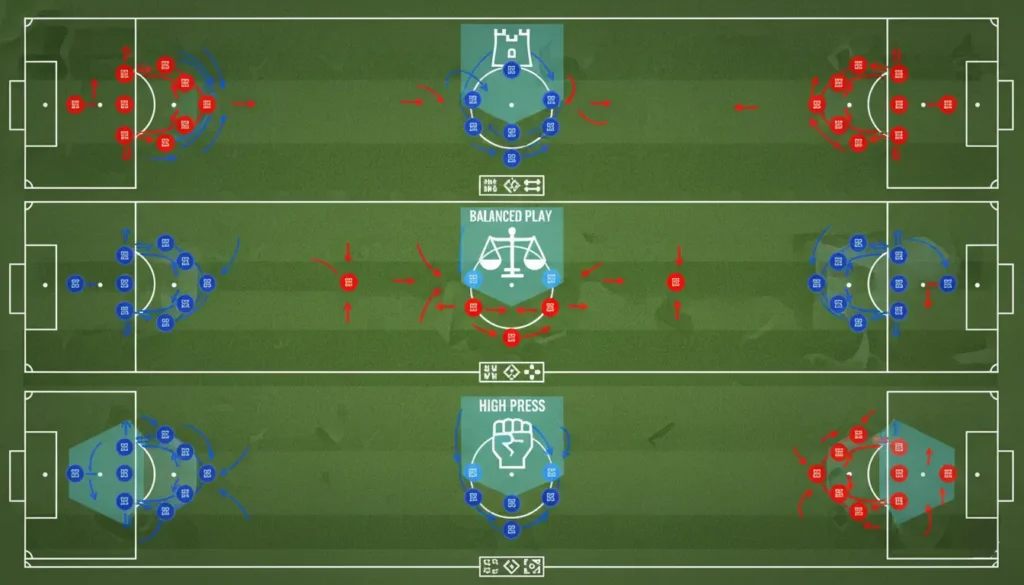
Understanding how different opponent types perform at Stamford Bridge helps identify situations where Chelsea home backing offers maximum value versus matches where caution is warranted despite home advantage.
Bottom-three teams visiting Stamford Bridge rarely threaten Chelsea’s dominance. Historical records show relegation-battling sides win at Stamford Bridge less than five percent of the time while drawing approximately fifteen percent. Chelsea wins eighty percent of these fixtures, often by multiple goals. These matches represent the most reliable Chelsea home betting opportunities, particularly through Asian handicap and margin markets that offer better returns than short-priced straight wins.
The psychological element in these mismatches deserves mention. Weak teams visiting elite venues sometimes surrender mentally before kickoff, accepting defeat as inevitable and playing primarily to minimize embarrassment. This defeatist mentality shows in passivity, reduced work rate, and defensive organization that crumbles under sustained pressure. Betting on Chelsea to dominate these matches through goals, corners, and possession-based markets capitalizes on this psychological surrender.
Mid-table opposition provides the most interesting Chelsea home betting opportunities because these teams arrive without fear but lack quality to consistently trouble Chelsea. Teams positioned eighth to fourteenth still compete earnestly at Stamford Bridge, creating open matches where both sides create chances. These fixtures tend toward higher scoring and more entertainment than bottom-three teams offering nothing or top-six sides playing cautiously. BTTS and overs markets find sweet spots in these mid-table matchups.
Top-six opponents transform Stamford Bridge dynamics completely. Elite opposition plays with confidence regardless of venue, bringing quality that neutralizes much of Chelsea’s home advantage. Chelsea’s win rate against top-six teams at home drops to fifty percent, with draws occurring thirty percent of the time. These matches demand completely different betting approaches—avoid backing Chelsea as favorites, explore draw and opponent value, and focus on goal-based markets rather than result betting.
Newly promoted teams in their first Stamford Bridge visit sometimes produce surprising performances. The occasion and lack of intimidation factor occasionally leads promoted sides to play with freedom that established mid-table teams lack. Historical data shows newly promoted teams collect points at Stamford Bridge in roughly twenty-five percent of fixtures, higher than their quality suggests. Exercise caution backing Chelsea against promoted opposition in autumn when these teams still ride momentum from promotion success.
Teams fighting relegation late in the season arrive at Stamford Bridge with maximum desperation that occasionally produces inspired performances. While Chelsea still wins the majority of these fixtures, the increased opponent motivation tightens margins and reduces Chelsea’s dominance. Backing Chelsea to win narrowly rather than dominate makes sense when opponents face relegation and battle for survival. These matches often finish 1-0 or 2-1 rather than the comfortable multi-goal Chelsea victories that bookmakers’ odds sometimes imply.
Managerial bounces affect opposition performance at Stamford Bridge in predictable ways. Teams visiting under new managers often show temporary improvement and enhanced motivation that makes them tougher opponents than their position suggests. Chelsea has dropped points to newly appointed managers at Stamford Bridge with surprising regularity—the new manager effect is real and worth accounting for when assessing match predictions. Reduce Chelsea backing confidence when opponents arrive under managers appointed within their last three matches.
Opposition tactical approaches fundamentally determine whether Chelsea dominates at Stamford Bridge or faces frustrating defensive blocks. Teams sitting deep with two banks of four frustrate Chelsea’s possession approach, often keeping matches tight even when Chelsea creates territorial dominance. Conversely, opponents who press high and engage Chelsea give away space that Chelsea exploits ruthlessly. Checking opponent’s defensive line depth statistics and pressing metrics predicts whether Chelsea will comfortably dismantle them or struggle to break down organized defending.
Home Form Streaks and Patterns
Chelsea’s home performances cluster into streaks—periods of excellence alternating with phases where even Stamford Bridge advantage doesn’t guarantee reliable results. Recognizing these patterns helps time Chelsea home betting for maximum profitability while avoiding frustrating losing runs.
Hot streaks at Stamford Bridge typically span four to seven matches where everything clicks. During these runs, Chelsea wins comfortably, scores freely, and looks genuinely dominant. The 2024-25 season featured an eight-match home winning streak from October through January where Chelsea outscored opponents twenty-three to six. Identifying when hot streaks begin and riding them aggressively produces concentrated profits that offset quieter periods.
The challenge with hot streaks is recognizing them early before odds adjust to reflect improved form. Early indicators include underlying statistics improving, Palmer hitting peak form, and defensive partnerships solidifying. When you notice these factors converging and Chelsea strings together two or three dominant home wins, increasing bet sizing and frequency makes sense. The streak will eventually end, but capitalizing fully during peak performance maximizes returns.
Cold streaks happen too, though they’re less common at Stamford Bridge than away. Chelsea occasionally endures three or four home matches producing disappointing results—narrow wins against weak opponents, unexpected draws, or rare losses. These cold phases often coincide with injury crises removing multiple key players, or defensive partnerships disrupted by suspensions and rotation. When cold streaks emerge, pulling back Chelsea home betting until form stabilizes prevents compounding losses.
Bounce-back performances after poor results create specific betting opportunities. Chelsea historically responds well to home disappointments by demolishing their next Stamford Bridge opponent. After the rare home loss or frustrating draw, Chelsea’s win rate in the immediately following home match approaches eighty-five percent, often by dominant margins. Bookmakers typically price these bounce-back matches normally rather than accounting for Chelsea’s enhanced motivation, creating value on Chelsea to respond emphatically.
Form against specific opponent clubs persists across seasons despite squad turnover. Chelsea has dominated certain clubs at Stamford Bridge regardless of relative quality—they’ve beaten West Ham in fifteen of the last seventeen home meetings spanning nearly a decade. These specific opponent trends provide additional confidence when backing Chelsea in matchups where historical dominance persists. Conversely, Chelsea struggles against certain opponents at home even when on paper they should dominate, and recognizing these problematic matchups prevents stubborn betting on negative-history fixtures.
Scoring timing patterns at Stamford Bridge reveal Chelsea nets thirty-eight percent of home goals in the opening thirty minutes, creating first-half value in early-score markets. Late-game scoring concentration is less pronounced at home than away, suggesting Chelsea’s home dominance means they score steadily throughout matches rather than relying on desperation late goals. This even scoring distribution means first-half markets and specific timeframe goals bets offer better value at home than away.
Clean sheet and concession patterns show Chelsea’s defensive fragility manifests even at Stamford Bridge, though less severely than away. They concede in fifty-five percent of home matches, often due to momentary concentration lapses rather than sustained opponent pressure. These defensive mistakes create BTTS value but also suggest that backing Chelsea while expecting clean sheets overestimates their defensive solidity. Better to back Chelsea to win while conceding than assume they’ll shut out opponents.
Weather and Pitch Conditions Factor

Stamford Bridge pitch conditions and London weather patterns create performance variables that informed bettors track but casual punters ignore. These environmental factors subtly influence outcomes in ways that create small but real betting edges.
Pitch quality at Stamford Bridge remains excellent throughout the season thanks to modern groundskeeping and partial drainage systems. However, heavy winter rainfall occasionally impacts surface quality, particularly from December through February. When pitch conditions deteriorate, Chelsea’s technical passing approach suffers more than direct, physical opponent styles. Checking recent rainfall and pitch reports before betting helps gauge whether conditions favor Chelsea’s approach or level the playing field.
Seasonal patterns beyond weather affect performance. Chelsea typically performs best at Stamford Bridge from October through March when football conditions are ideal—cool but not cold, pitches in peak condition, and fixture rhythm established. August and September see early-season inconsistency while April and May sometimes feature motivation drops when competitive positions are secure. Concentrating Chelsea home betting during optimal October through March window produces better results than year-round indiscriminate backing.
Opponent travel impact on performance gets underestimated. Teams traveling from Northern England or Scotland face longer journeys that disrupt preparation and create minor fatigue. While professional clubs minimize travel impacts through planning, subtle effects persist. Chelsea hosting teams after midweek European competition involving long travel creates situations where opponents arrive less than optimally prepared, enhancing Chelsea’s home advantage marginally beyond standard baselines.
After reading about the site’s home-match strategy for Chelsea betting and the special conditions that make Stamford Bridge fixtures unique, readers can return to chelseabetexpert to keep exploring broader contextual betting themes.