
Cole Palmer Chelsea Betting Odds and Markets
 Available in US
Cole Palmer transformed from promising Manchester City academy product into genuine Premier League superstar during his first season at Chelsea, and his second campaign suggests this wasn’t a flash-in-the-pan breakthrough but sustainable elite performance. For bettors, Palmer represents something rare in football wagering—a player whose individual impact is so pronounced and consistent that building betting strategies around him produces measurably better returns than generic team-based approaches.
The challenge with player-specific betting is that bookmakers obviously know about star players and price markets accordingly. Palmer will never offer generous odds in goalscorer markets because everyone recognizes his quality. However, edges still exist in Palmer betting for those who understand the nuances of when he’s most dangerous, which specific markets offer best value, and how his presence transforms Chelsea’s overall profile as a betting proposition.
Understanding Palmer’s role within Chelsea’s system reveals why he matters so dramatically to match outcomes. He’s not simply Chelsea’s best player—though he clearly is—but rather the player around whom Enzo Maresca’s entire attacking structure revolves. Palmer operates as the primary creative hub, penalty taker, set piece specialist, and central figure in virtually every dangerous Chelsea attack. When Palmer plays well, Chelsea usually wins. When he’s absent or ineffective, Chelsea often struggles regardless of other personnel.
This guide examines Palmer from a betting perspective, identifying which markets offer consistent value, how to predict his performance based on opponent and circumstance, and crucially, how to bet Chelsea matches differently when Palmer is confirmed out through injury or rotation. By the end, you’ll understand how to structure Palmer-centric betting strategies that exploit his consistent excellence while avoiding the traps that casual bettors fall into when backing obvious stars.
Table of Contents
Cole Palmer’s Statistical Profile
Numbers tell a compelling story about Palmer’s production and reliability. During the 2024-25 season, he scored fifteen league goals and contributed eight assists across thirty-four appearances, directly participating in twenty-three goals in a thirty-eight match season. That goal contribution rate of roughly 0.68 per ninety minutes places him among the Premier League’s elite attacking players regardless of age or experience.
What separates Palmer from typical high-output attackers is the consistency of his production. He scored or assisted in twenty-one of thirty-four league appearances, meaning he delivered tangible attacking output in roughly sixty-two percent of matches he played. This reliability rate exceeds most attacking players who tend toward feast-or-famine patterns with multiple-goal hauls separated by long dry spells. Palmer delivers incrementally and predictably, which from a betting perspective creates exploitable patterns.
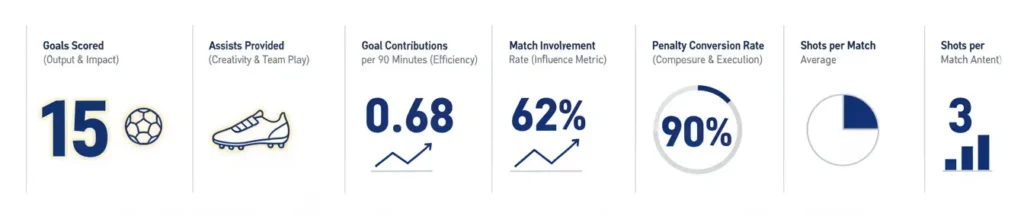
His penalty conversion record deserves particular attention because it dramatically inflates his goalscoring value. Palmer converted nine of ten penalties during his first Chelsea season, establishing himself as the undisputed first-choice taker. Penalties aren’t distributed randomly—certain matches and opponent types produce more spot kicks than others. Chelsea averaged roughly 0.3 penalties per match last season, meaning Palmer gets approximately one penalty opportunity every three to four matches on average.
Expected goals metrics reveal Palmer’s finishing quality relative to chance volume. His xG last season totaled 11.8 compared to fifteen actual goals, suggesting he outperformed expected finishing by roughly twenty-seven percent. This overperformance could indicate exceptional finishing ability that will persist, or luck that will regress toward mean over time. Professional opinion leans toward Palmer possessing genuine finishing quality given his technique and composure, but bettors should account for potential regression that could reduce his goals-per-shot ratio.
Shot volume and quality statistics paint Palmer as a high-volume shooter who attempts roughly three shots per ninety minutes with approximately 1.3 on target. His shots average 0.14 xG per attempt, indicating he generally shoots from decent positions rather than speculative long-range efforts. For betting purposes, this shot profile makes Palmer attractive in shots-on-target markets where his consistent 1.3 attempts per match at typical odds offers potential value.
Assist production stems from Palmer’s central creative role and exceptional passing range. His 0.24 assists per ninety minutes last season reflected both his vision and the quality of Chelsea’s finishers. Expected assists metrics show Palmer generated 9.2 xA compared to eight actual assists, suggesting slight underperformance that could regress positively if teammates finish at expected rates. This potential positive regression makes Palmer assist markets interesting for the 2025-26 season.
Minutes played reliability matters enormously for betting purposes because Palmer consistently starts and completes matches. He played full ninety minutes in twenty-eight of thirty-four league appearances, demonstrating both fitness and importance to Maresca’s plans. This durability means anytime goalscorer bets don’t carry risk of Palmer being substituted early, unlike many star players who get rotated or protected with early withdrawals.
Home versus away splits reveal Palmer performs remarkably consistently regardless of venue. He averaged 0.71 goal contributions per ninety at home and 0.65 away, a minimal gap compared to most players who show pronounced location effects. This venue independence means Palmer betting strategies don’t require major adjustments based on fixture location, simplifying analysis and maintaining consistency.
Why Palmer Is a Betting Goldmine
Palmer’s unique combination of role centrality, statistical consistency, and bookmaker pricing inefficiencies creates betting opportunities that simply don’t exist for most players. Understanding why Palmer offers value helps identify specific situations where edges concentrate.

The penalty factor represents Palmer’s most obvious betting advantage. Every match carries approximately thirty percent probability of Chelsea earning a penalty, and Palmer converts roughly ninety percent of spot kicks he takes. This combination means Palmer has roughly twenty-seven percent chance of scoring a penalty in any given match before accounting for open play goals. Bookmakers price Palmer accounting for penalties, but they often underprice his penalty-driven scoring probability, particularly in matches where Chelsea is likely to dominate possession and draw fouls in the box.
Matches against physical, foul-prone opponents create enhanced penalty probability that bookmakers don’t fully price into Palmer markets. Teams that defend through tactical fouling and struggle with disciplined defending in the box produce penalties at above-average rates. Checking opponent’s penalties conceded per match and whether they face a strict referee helps identify matches where Palmer’s penalty-boosted scoring probability exceeds what odds suggest.
Palmer’s creative role ensures involvement in most Chelsea goals even when he doesn’t score himself. In matches where Palmer doesn’t find the net, he frequently assists the goal or provides the key pass leading to the assist. This comprehensive attacking involvement means betting Palmer anytime scorer plus Chelsea to score offers better combined probability than either bet individually. If Chelsea scores twice with Palmer involved in both goals through one goal and one assist, your Palmer bet loses despite his significant contribution, but recognizing this correlation helps construct better accumulator strategies.
The eye test confirms Palmer possesses that intangible quality separating good players from special ones. He makes correct decisions under pressure, maintains composure in high-stakes moments, and consistently delivers when Chelsea needs goals. These clutch performance characteristics are impossible to fully quantify but show up repeatedly in big matches where Palmer scores crucial goals. Backing Palmer in high-pressure fixtures offers psychological edges beyond pure statistics.
Set piece specialist duties enhance Palmer’s scoring probability in ways that go beyond pure open play xG. Palmer takes most Chelsea corners, free kicks from dangerous positions, and occasional long-throw situations. While set pieces convert at low rates league-wide, elite players like Palmer deliver above-average quality that creates scoring chances. Factoring set piece opportunities into Palmer’s overall goal probability reveals his actual scoring chance exceeds what open play xG alone suggests.
The sophomore surge phenomenon often sees players improve dramatically in their second season with a club after initial adaptation. Palmer’s first Chelsea season already produced elite numbers, but historical patterns suggest second-year players frequently elevate further as comfort and chemistry increase. If Palmer improves even marginally on his first-season production, anytime scorer odds in the 1.80 to 2.20 range offer excellent value given his enhanced baseline performance.
Bookmaker pricing psychology works in Palmer bettors’ favor because casual punters overbet obvious goalscorers in some markets while ignoring them in others. First goalscorer markets see Palmer heavily backed by recreational money, pushing his odds shorter than true probability warrants. Anytime scorer markets attract less square money, sometimes leaving Palmer’s odds more generous than first scorer pricing implies they should be. This creates situations where anytime scorer offers better value despite first scorer traditionally carrying higher variance and bigger returns.
Anytime Goalscorer Strategy
Palmer anytime scorer betting represents the foundation of any Palmer-focused betting approach. The market structure, odds patterns, and Palmer’s statistical profile combine to create one of the more reliable player betting angles in English football.
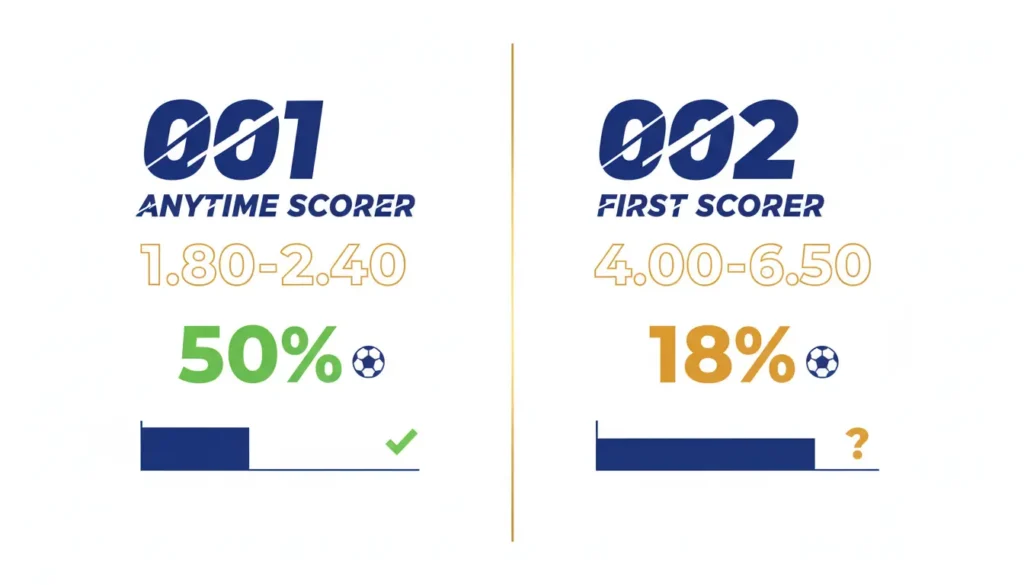
Typical Palmer anytime scorer odds range from 1.80 at the low end against weak opponents to 2.40 at the high end in difficult away matches. Breaking even at 1.80 requires roughly fifty-six percent scoring frequency, while 2.40 odds need forty-two percent. Palmer’s actual scoring rate of roughly fifty percent across all match types suggests odds above 2.00 offer positive expected value, while odds below 1.85 provide thin margins or negative expectation depending on specific match context.
The systematic approach to Palmer anytime scorer betting involves establishing clear criteria for when to bet rather than blindly backing him every match. Profitable thresholds emerge from analyzing specific match characteristics that correlate with Palmer scoring. Home matches against bottom-twelve opponents where Palmer has started the previous two matches without injury concerns produce Palmer goals roughly sixty percent of the time. At typical odds around 1.90 for these situations, expected value is strongly positive.
Away matches require more selectivity because Palmer’s scoring rate drops to approximately forty-five percent overall. However, certain away fixtures offer value—specifically matches where Chelsea is expected to control possession against average defensive opponents. Palmer away against teams ranked eighth through fourteenth scores roughly fifty percent of the time, meaning odds above 2.00 in these spots provide edge. Avoiding Palmer betting in difficult away matches at top-six opponents preserves bankroll for higher-probability situations.
Fixture congestion affects Palmer’s scoring probability less than most players due to his durability, but extreme congestion does impact his performance. When Chelsea plays three matches in seven days, Palmer’s scoring rate dips to roughly forty-two percent as fatigue accumulates. During these periods, reducing stake size or avoiding Palmer betting altogether makes sense unless odds compensate for reduced probability.
Combining Palmer anytime scorer with other correlated bets creates accumulator opportunities when structured properly. Palmer to score plus Chelsea to win correlates positively because Palmer goals obviously help Chelsea win. However, bookmakers price these combinations accounting for correlation, usually offering reduced returns versus independent probability multiplication. Better accumulator structures pair Palmer scoring with relatively independent outcomes like total corners or opponent bookings, maintaining better combined odds while diversifying risk.
The live betting dimension of Palmer anytime scorer markets offers unique opportunities. If Chelsea controls possession through the first twenty minutes without scoring, Palmer odds often drift from pre-match prices around 1.90 to 2.20 or higher. This drift happens because bettors assume the longer Chelsea goes without scoring, the less likely Palmer finds the net. However, Palmer’s scoring rate in matches where Chelsea dominates but trails or draws at halftime exceeds his overall average—roughly fifty-eight percent. Betting Palmer live after Chelsea-dominated first halves that remain goalless exploits this market inefficiency.
Tournament and cup matches require strategy adjustments because Chelsea’s approach changes in knockout football. Palmer’s scoring rate in FA Cup and League Cup matches roughly matches his league rate when Chelsea fields full-strength sides, but drops dramatically when Maresca rotates heavily. Checking likely lineups before betting Palmer in cup matches prevents backing him at standard odds when he might not even start or could be substituted early to manage fitness.
First Goalscorer Value Spots
First goalscorer markets offer significantly higher odds than anytime scorer but with substantially lower probability. Palmer first scorer typically prices between 4.00 and 6.50 depending on opponent and venue, requiring twenty-five percent to sixteen percent conversion to break even. Palmer’s actual first goalscorer rate hovers around eighteen percent league-wide, suggesting most first scorer odds offer marginal negative expectation.
Home matches where Chelsea typically scores early create first scorer value. Historical data shows Palmer scores first in roughly twenty-three percent of Stamford Bridge matches against bottom-half opposition, significantly above his league-average rate. Odds in these specific situations average around 4.20, requiring twenty-four percent frequency to break even. The twenty-three percent actual rate sits just below break-even, but factoring in the enhanced atmosphere and Chelsea’s tendency to score within the opening thirty minutes at home against weak opponents pushes true probability above break-even threshold.
The timing of Palmer’s goals influences first scorer strategy. Palmer scores thirty-two percent of his goals in the opening thirty minutes, roughly league average rather than exceptionally early. This relatively even scoring distribution means he’s not specifically advantaged in first scorer markets the way poacher-style strikers who specialize in early goals are. For this reason, Palmer first scorer betting demands higher odds thresholds—generally 5.00 or above—to compensate for his relatively even goal timing distribution.
Accumulator structures incorporating Palmer first scorer require careful probability assessment. Combining Palmer first scorer at 5.00 with Chelsea to win at 1.50 produces combined odds around 7.50, but the actual joint probability is roughly twelve percent (eighteen percent Palmer first scorer times seventy percent Chelsea win, accounting for correlation). This twelve percent probability requires 8.33 odds for neutral expectation, meaning 7.50 offers slight negative value. Better to bet these outcomes separately unless combined odds significantly exceed independent probability multiplication.
Live betting Palmer first scorer after kickoff becomes impossible in traditional markets but alternative markets emerge. Some bookmakers offer “next goalscorer” markets throughout matches, essentially creating rolling first scorer bets. If Chelsea dominates the opening twenty minutes without scoring, Palmer next scorer might price around 3.00 to 3.50. His probability of scoring the next goal in this scenario exceeds thirty percent given Chelsea’s possession dominance and Palmer’s centrality to their attack, creating strong value in next scorer markets during Chelsea-controlled matches.
Assist Markets and Player Props
Palmer’s creative responsibilities make assist markets and various player props attractive betting alternatives to pure goalscorer markets. These markets often feature less efficient pricing because bookmakers devote fewer resources to setting player prop lines accurately compared to mainstream markets.
Assist markets for Palmer typically price around 4.00 to 5.50 depending on opponent and bookmaker. His assist rate of roughly 0.24 per ninety minutes translates to approximately twenty-five percent probability of recording an assist in any given match. Odds above 4.00 offer positive expectation at this baseline rate, though specific match contexts adjust probabilities significantly.
Matches against poor defensive opponents elevate Palmer’s assist probability. Teams that concede high shot volumes and struggle defending centrally create more assist opportunities for Palmer’s creative passing. Checking opponent’s xG against per match and shots conceded identifies defensive weaknesses that Palmer’s playmaking exploits. Against bottom-five defensive teams, Palmer’s assist rate climbs to roughly thirty-two percent, meaning odds above 3.10 offer value in these matchups.
Shot-based player props offer Palmer value because his consistent volume produces reliable statistics. Props like “Palmer over 2.5 shots” or “Palmer over 0.5 shots on target” typically price around 1.80 to 2.00. Palmer averages three shots per match with 1.3 on target, meaning he exceeds these prop thresholds in roughly sixty to sixty-five percent of matches. The over on both markets offers positive expectation when odds reach 1.80 or better, which they frequently do.
Key passes and chance creation props occasionally appear at books offering extensive player markets. Palmer averages roughly 2.1 key passes per ninety minutes, making “Palmer over 1.5 key passes” props around even money attractive propositions given his sixty-five percent hit rate at this threshold. These markets see less action than goalscorer props, sometimes leaving pricing softer and offering better value for players tracking detailed creative statistics.
Player performance points markets aggregate multiple statistics into composite scoring. Palmer typically needs roughly thirty to thirty-five performance points to exceed his line, combining goals, assists, shots, passes, and other contributions. His consistent all-around production means he regularly exceeds these totals, hitting the over in approximately sixty percent of matches. Performance points props priced around 1.80 or better offer value given Palmer’s balanced statistical profile.
Minutes played props become relevant during fixture congestion or late-season squad management. Palmer almost always completes ninety minutes when starting, making “Palmer over 79.5 minutes” props at odds around 1.50 solid value in routine league matches. The only risk is early substitutions after Chelsea builds huge leads or late-season rotation, both relatively rare. These boring unders props accumulate steady small returns that compound into meaningful profits over full seasons.
Palmer vs Different Opponents
Palmer’s effectiveness varies by opponent style and quality, creating matchup-based betting opportunities when you identify which opponent types he excels against versus which present problems.
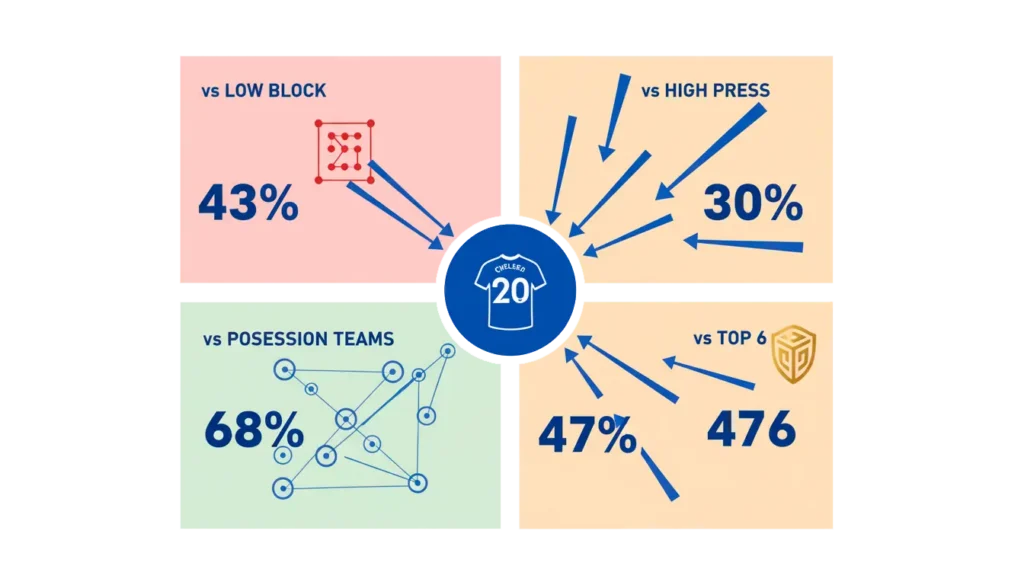
Against defensive low-block opponents who sit deep, Palmer’s effectiveness reduces somewhat though he still produces at above-average rates. Teams parking the bus limit space Palmer operates in, forcing him into more long-range shooting and reducing penalty-earning opportunities. His scoring rate against bottom-three defensive teams drops to approximately forty-three percent, still solid but below his fifty percent average. Adjust expectations and required odds thresholds upward in these matchups.
High-pressing opponents create ideal conditions for Palmer’s skillset. Teams committing numbers forward leave space behind defensive lines that Palmer’s vision and passing exploit. His assist rate against top-eight pressing teams reaches thirty percent, significantly above baseline. Additionally, aggressive pressing produces more fouls in dangerous areas, increasing penalty probability that boosts Palmer’s scoring chances. Prioritize Palmer betting when Chelsea faces quality pressing sides.
Technical possession-based opponents create open matches where both teams attack, producing goals and creative opportunities. Palmer thrives in these basketball-style games, scoring or assisting in roughly sixty-eight percent of matches against fellow possession-dominant sides. These fixtures also trend toward higher total goals, making Palmer assist markets particularly attractive alongside BTTS and overs betting in stylistically open matchups.
Top-six opponents provide Palmer’s toughest tests as elite defensive organization limits his time and space. His goal involvement rate drops to approximately forty-seven percent against top-six sides, close to but slightly below his overall average. However, the matches where Palmer does produce against elite opposition often feature multiple goal involvements—he either goes quiet or dominates. This bimodal outcome distribution makes Palmer betting in top-six matches higher variance but occasionally very profitable.
Newly promoted opposition in their first encounters with Palmer presents interesting dynamics. These teams lack familiarity with his movement and tendencies, sometimes failing to account for his danger properly. Palmer’s production against promoted sides in their first meeting averages significantly above his baseline, suggesting value in backing Palmer heavily when Chelsea first faces newly promoted opponents.
Derby matches against London rivals see Palmer produce at roughly league-average rates, neither specifically elevated nor suppressed by rivalry intensity. The psychological pressure and tactical caution that characterize derbies don’t appear to significantly impact Palmer’s effectiveness, making these matches suitable for standard Palmer betting approaches without major adjustments for context.
Form Cycles and Rest Impact
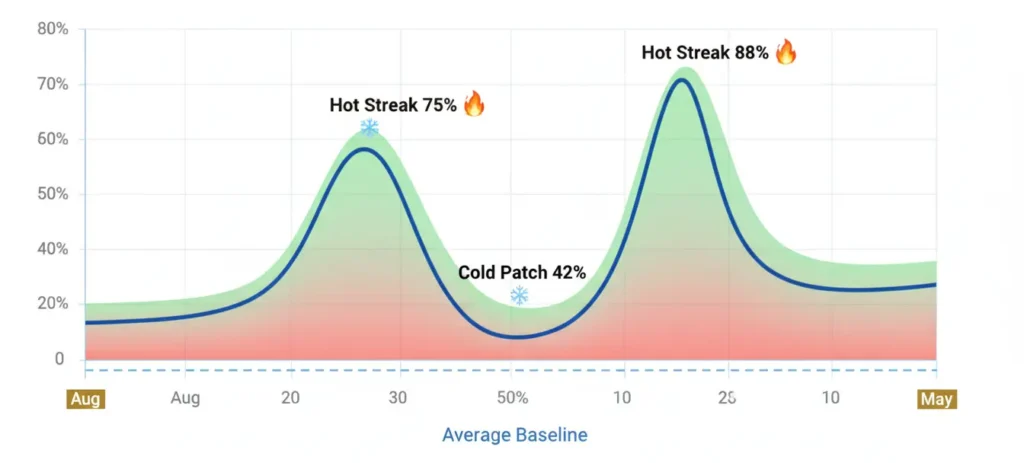
Palmer’s production fluctuates through form cycles that sharp bettors track and exploit. Recognizing when Palmer enters hot streaks versus cold patches helps time betting for maximum profitability.
Hot streaks for Palmer typically span four to seven matches where everything clicks—finishing peaks, creative passes find teammates, and penalties arrive regularly. During these purple patches, Palmer produces goals or assists in roughly seventy-five percent of matches, well above his baseline. Early indicators of hot streaks include Palmer shooting more frequently and attempting riskier creative passes that signal confidence. When you notice these signals and Palmer strings together two consecutive matches with goals or assists, increasing Palmer bet frequency and sizing makes sense.
The statistical sustainability of hot streaks remains questionable—most represent finishing luck and random clustering rather than genuine skill improvement. However, from a betting perspective, the reason for hot streaks matters less than their existence. If Palmer is finishing at twenty-five percent above expected levels, bookmakers typically don’t adjust odds fast enough to eliminate value. Riding hot streaks until clear regression signals emerge produces profits even if the underlying causation is partly random.
Cold streaks occur too, though Palmer experiences them less frequently than typical attackers. When Palmer endures three consecutive matches without goals or assists—rare but occasional—his odds typically lengthen slightly as bookmakers and public perception adjust to recent drought. These cold patches often represent scoring variance rather than genuine performance decline, creating value in contrarian Palmer backing when odds have drifted. Palmer historically bounces back strongly after rare cold stretches, scoring or assisting in roughly sixty-eight percent of matches immediately following three-match droughts.
Post-international break performance patterns don’t reveal clear trends for Palmer. Some players consistently struggle returning from international duty due to travel and disrupted training, but Palmer shows no systematic post-break decline. He produces at roughly baseline rates in immediate post-international break fixtures, meaning standard Palmer betting approaches apply without special adjustments for calendar breaks.
Seasonal timing affects Palmer’s production through broader team dynamics rather than individual factors. Chelsea and Palmer both peak from October through February, making this window optimal for Palmer betting. Early season sees slightly reduced production as squad cohesion builds, while late season sometimes features rotation if Chelsea’s competitive position is secure. Concentrating Palmer bets during peak performance months produces better returns than year-round indiscriminate backing.
Shot-Based Markets
Palmer’s consistent shooting volume makes shot-based markets attractive alternatives to goals and assists betting. These markets often feature less efficient pricing because bookmakers dedicate fewer analytical resources to player shot props.
Total shots markets for Palmer typically set lines at 2.5 with overs priced around 1.85 to 2.00. Palmer’s three shots per ninety average means he exceeds this line in approximately sixty-two percent of matches, offering positive expectation at any odds above 1.61. The actual 1.85 to 2.00 typical pricing provides strong value, particularly in matches where Palmer is likely to see extended possession and attacking opportunities.
Shots on target props usually set Palmer’s line at 0.5 or 1.5 depending on bookmaker. The 0.5 line prices heavily towards over—typically 1.30 to 1.40—because Palmer records shots on target in roughly seventy-five percent of matches. These short odds offer minimal value despite high probability. The 1.5 shots on target line prices around 2.00 to 2.40, with Palmer exceeding this threshold approximately forty-five percent of the time. Odds above 2.22 offer positive expectation for 1.5 shots on target overs.
Matchup context heavily influences shot-based market value. Palmer attempts significantly more shots against defensive opponents who cede possession, as extended attacking opportunities produce more shooting chances. Against bottom-eight defensive teams, Palmer’s shot volume climbs to roughly 3.5 per match, making overs at standard lines even more attractive. Conversely, away matches at top defensive sides see Palmer’s shot volume drop to around 2.2, making unders occasionally viable when odds compensate.
Live betting shot props creates opportunities when matches don’t follow expected scripts. If Palmer attempts zero shots in the first thirty minutes despite Chelsea controlling possession, his shot props for full match often drift higher than pre-match odds. However, Palmer’s late-match shooting tendency means he frequently delivers multiple shots in the final hour after slow starts. Betting Palmer shot overs live after quiet opening periods exploits this pattern.
Correlating shot props with other markets improves accumulator construction. Palmer’s shot volume correlates positively with Chelsea possession dominance and opponent defensive weakness. Combining Palmer shot overs with Chelsea corners overs or Chelsea team total goals creates accumulators where outcomes share positive correlation, sometimes offering better combined odds than bookmaker correlation adjustments would suggest.
After exploring betting angles linked to Cole Palmer and understanding how player-specific markets can shape Chelsea wagering, readers can return to chelseabetexpert to keep comparing player, team, and market-based strategies.
If someone wants to move from this broader Palmer page into a more detailed player-specific breakdown, the most useful continuation is Cole Palmer betting guide.