
Weather Impact Chelsea Match Betting Odds
 Available in US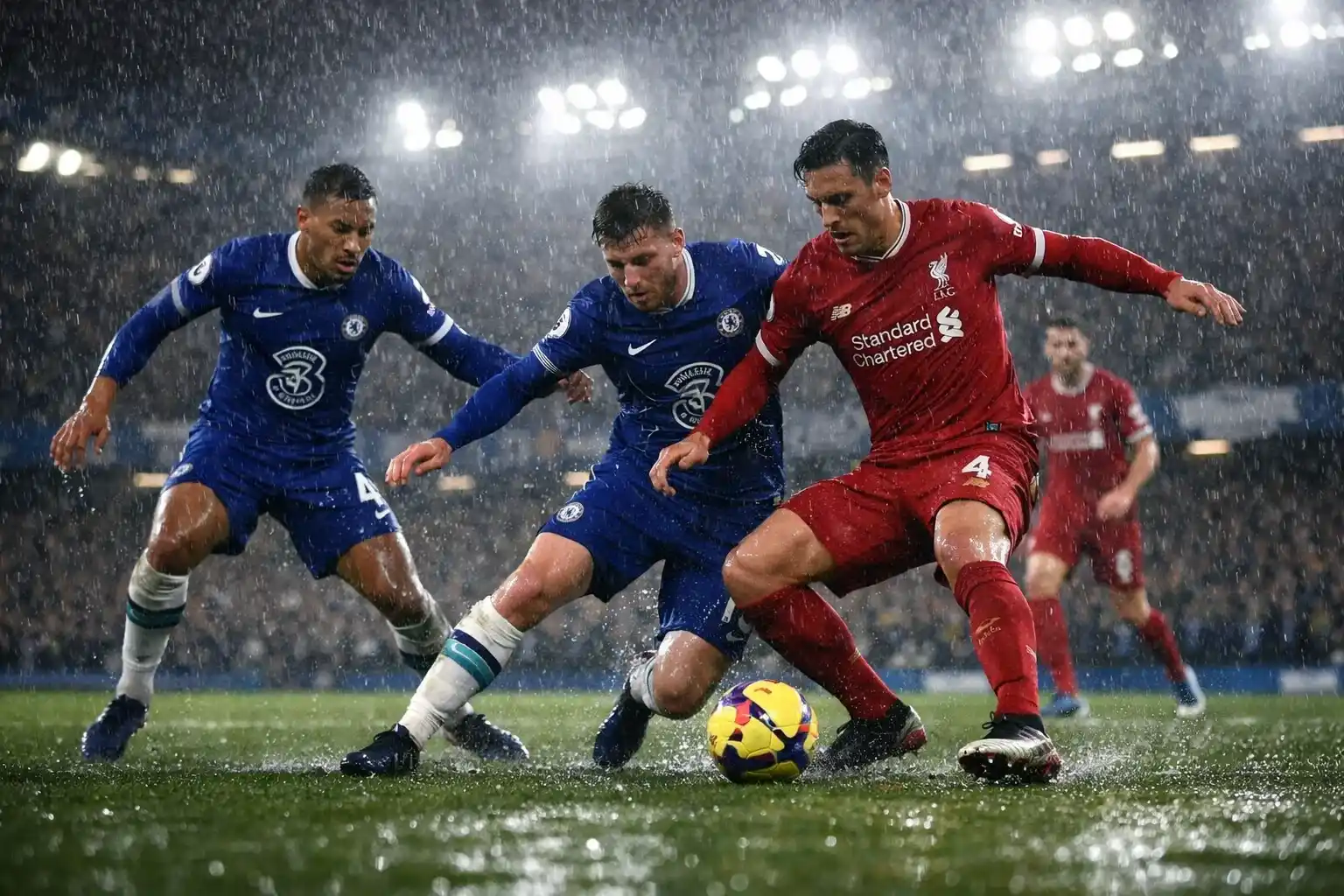
Weather conditions influence football outcomes in ways that casual bettors overlook and bookmakers inconsistently price. When rain creates slippery surfaces, wind disrupts aerial play, or cold temperatures affect player mobility, the expected match dynamics shift in predictable directions. Chelsea’s technical, possession-based style makes them particularly susceptible to weather effects that merit systematic betting consideration.
English football’s relationship with weather creates regular betting opportunities. Premier League matches rarely get postponed regardless of conditions, meaning teams must perform through rain, wind, and cold that would halt play in other leagues. Chelsea’s West London location experiences typical English weather patterns, with autumn and winter fixtures frequently featuring conditions that affect match outcomes.
Table of Contents
Rain and Wet Pitch Effects
Heavy rainfall transforms pitch surfaces in ways that fundamentally alter match dynamics. Wet pitches accelerate ball movement while making controlled first touches more difficult. Technical teams like Chelsea, built around precise passing and controlled possession, often struggle more than direct opponents who bypass midfield with long balls.
The ball’s behavior changes dramatically on wet surfaces. Ground passes travel faster and further, making interceptions harder but also making controlled receiving more challenging. Chelsea’s intricate passing combinations become riskier when the ball skids unpredictably, potentially favoring more direct approaches.
Wet conditions increase tackle difficulty and dangerous challenge frequency. Players sliding into challenges on slippery surfaces create more card-worthy incidents, potentially inflating booking totals beyond normal expectations. Chelsea’s high card accumulation rates may increase further during wet matches, creating over booking points value.
Premier League pitches generally drain well due to modern infrastructure investments, but heavy sustained rainfall still creates surface water that affects play. Stamford Bridge’s pitch maintenance keeps conditions playable, but visiting lower-league grounds in cup competitions may present genuinely difficult surfaces that favor physical approaches over technical football.
Wet weather betting adjustments for Chelsea should include reduced backing on intricate passing statistics and increased consideration of more cards markets. Both teams to score may become more likely as wet conditions create defensive errors, while clean sheet backing becomes riskier.
Wind Effects on Match Dynamics

Strong winds affect football in ways that teams cannot fully mitigate through tactical adjustments. Aerial balls become unpredictable, set pieces lose accuracy, and goalkeepers face challenging cross collection. Chelsea’s set-piece routines and crossing patterns suffer when wind gusts reach significant levels.
Wind direction creates temporary advantages that shift across halves. Teams playing with the wind benefit from extended range on clearances and crosses, while teams facing the wind struggle to build attacks through aerial channels. This creates first-half versus second-half goal distribution patterns worth tracking.
Corner kick efficiency decreases dramatically in windy conditions as delivery accuracy suffers. Chelsea’s corner routines, designed around specific delivery trajectories, become less reliable when wind alters ball flight. Corner markets may offer value on under selections during windy matches.
Long-range shooting becomes more speculative in windy conditions, though occasional spectacular wind-assisted goals do occur. Under goals markets become more attractive when both teams face conditions that limit attacking precision.
Match postponements for wind remain rare but do occur. The December 2024 Merseyside derby postponement due to Storm Darragh-related safety concerns demonstrated that extreme wind can halt Premier League fixtures. Bettors should monitor weather warnings and understand void bet procedures before staking on fixtures with postponement risk.
Cold Weather Considerations
Cold temperatures affect player performance through reduced muscle elasticity, altered ball behavior, and psychological comfort factors. Players require longer warm-up periods and may experience more muscle injuries when temperatures drop significantly.
Ball flight changes in cold, dense air conditions. Long passes travel slightly shorter distances, affecting the calibration players develop through training in moderate conditions. This subtle effect accumulates across matches, potentially affecting shooting accuracy and passing range.
Player concentration may actually improve in cold conditions as the temperature demands attention. Some research suggests fewer mental errors in cold versus hot conditions, though physical performance ceiling decreases. This trade-off creates unpredictable effects that make cold weather markets harder to price.
Pitch hardness increases in freezing conditions even without visible frost. Hard pitches favor faster play but increase injury risk and make sliding tackles more dangerous. Card totals may increase as referees protect players from dangerous challenges on unforgiving surfaces.
Technical Team Vulnerabilities
Chelsea’s possession-based approach proves particularly vulnerable to adverse weather conditions. Teams built around precise passing, controlled build-up, and technical superiority sacrifice some of these advantages when conditions deteriorate. This reality should inform betting adjustments.
The observation that technical teams struggle in poor conditions while physical teams thrive has long history in English football. The cliche about testing whether stars “can do it on a cold, wet Tuesday night in Stoke” captures a genuine phenomenon. Chelsea’s young, technically gifted squad may face particular challenges in conditions that favor physical directness.
Opponent analysis becomes crucial for weather-related betting. When Chelsea face physical, direct opposition in poor conditions, the quality gap that normally favors Chelsea may narrow significantly. Conversely, facing similarly technical opponents in poor conditions levels the playing field in different ways.
Practical Weather Betting Approach
Develop a pre-match weather check routine that examines forecasts for every Chelsea fixture. Multiple weather sources provide forecasts specific to stadium locations, allowing assessment of likely conditions at kick-off and throughout matches.
Create weather thresholds that trigger betting adjustments. Rainfall above certain levels, wind speeds beyond specific mph readings, or temperatures below particular thresholds should prompt systematic reconsideration of standard approaches. These thresholds develop through experience tracking weather-result relationships.
Document weather conditions for every Chelsea match you bet on, then periodically analyze whether certain conditions correlate with specific outcomes. This personal database reveals patterns that general research may miss, creating individualized edges.
In-play betting benefits from real-time weather observation. Conditions may deteriorate or improve during matches in ways that affect second-half markets differently than pre-match expectations suggested. Rain stopping at halftime, for instance, may shift second-half dynamics toward the technical team.
Seasonal Weather Patterns
English weather follows seasonal patterns that create predictable betting adjustment periods. Autumn brings increasing rainfall that reaches peak levels through winter months. Spring typically sees improving conditions, though April showers maintain some weather-related variability.
December and January fixtures face the highest likelihood of adverse conditions, coinciding with the fixture congestion discussed elsewhere. The combination of weather challenges and fatigue creates compounded effects that merit the most aggressive betting adjustments.
Early-season fixtures in August and September typically feature the most benign conditions, with warm temperatures and limited rainfall. These conditions favor Chelsea’s technical approach most strongly, potentially creating value in backing the Blues during this period.
Cup competition timing affects weather exposure. FA Cup third-round fixtures in January coincide with the poorest weather period, while Carabao Cup finals in February may still face challenging conditions. Consider weather patterns when assessing cup competition betting opportunities.
Weather betting ultimately provides one additional variable in the complex equation of match prediction. It should inform adjustments rather than drive selections, but ignoring weather effects means missing edges that attentive bettors can capture.
Integration with Other Factors

Weather effects compound with other situational variables in ways that create amplified betting opportunities. A congested Chelsea facing poor weather against physical opposition creates multiple disadvantages that may not be fully reflected in odds. Conversely, well-rested Chelsea in good conditions against technically similar opponents represents optimal circumstances for backing the Blues.
Consider weather in accumulator construction carefully. Including multiple fixtures expected to face adverse conditions increases variance beyond what individual match analysis suggests. Weather-related upsets compound across accumulator legs, making conservative construction during poor weather periods particularly important.
The bookmaker response to weather varies significantly. Some major bookmakers adjust lines based on weather forecasts while others maintain static pricing. Identifying which bookmakers respond to weather and which do not creates opportunities for finding value in specific markets. Monitor odds movements as weather forecasts become clearer in the days before fixtures to understand market responses.