
Chelsea Form Analysis Betting Odds Trends
 Available in US
Every bettor knows form matters, but few understand how to actually read it. Watching Chelsea’s results scroll across your screen tells you something – they won, they lost, they drew – but it reveals remarkably little about what happens next. The punters who consistently profit from form analysis go deeper, dissecting *why* results occurred rather than simply cataloguing them. Chelsea’s 2024-25 campaign finished with 20 wins, 9 draws and 9 defeats in the Premier League, placing them firmly in the top four conversation. Those raw numbers, however, mask complex underlying trends that separated smart money from square bettors throughout the season.
Form analysis for betting purposes differs fundamentally from form analysis for team assessment. Managers and pundits care whether a team is improving or declining; bettors care whether the market has correctly priced that trajectory. A team in brilliant form often presents terrible betting value because bookmakers have already adjusted odds to reflect their hot streak. Conversely, a struggling side might offer outstanding value if underlying metrics suggest their poor results stem from variance rather than genuine decline. Chelsea, with their young squad and tactical evolution under Enzo Maresca, has provided numerous examples of both scenarios.
The architecture of form analysis demands multiple lenses. Surface-level form – the simple win-draw-loss record – provides your starting point but should never be your destination. Performance form examines *how* matches unfolded regardless of results. Statistical form tracks key metrics across matches to identify trends the scoreline obscures. And psychological form considers how recent events might affect upcoming performances. Each lens reveals different aspects of Chelsea’s current state, and sophisticated bettors synthesize all four into coherent betting positions.
Table of Contents
Dissecting Chelsea’s Performance Cycles
Chelsea’s season typically follows recognizable performance cycles that create predictable betting patterns. The opening weeks often feature adjustment periods as new signings integrate and tactical systems bed in. Mid-season brings the congested fixture period where squad depth matters more than starting eleven quality. The run-in presents different pressures depending on competitive stakes. Understanding where Chelsea sits in their seasonal cycle helps contextualize current form within broader patterns.
Squad rotation patterns significantly impact match-by-match form analysis. When Chelsea deploy their strongest available eleven, their expected output differs materially from matches featuring heavy rotation. Tracking which players started across recent matches reveals whether current form reflects first-choice performance or rotated-side results. A three-match winless run with Maresca resting key players ahead of Champions League knockout stages tells a different story than identical results with full-strength lineups.
The managerial factor adds complexity to Chelsea’s form profile. Maresca’s tactical approach creates specific performance signatures – possession-heavy football, progressive passing, particular pressing triggers – that manifest differently against various opposition styles. Form analysis must account for tactical matchups, recognizing that Chelsea’s excellent form against teams who allow possession may not translate against opponents who successfully disrupt their buildup. Reading form without understanding tactical context leads to false conclusions.
Fixture sequencing influences form more than casual observers appreciate. Chelsea’s results and performances following European midweek matches historically differ from their output with full rest. Similarly, their form in matches preceded by defeats shows different patterns than performances after victories. Building a dataset of Chelsea’s results segmented by previous match outcome and rest days reveals tendencies that inform betting positioning when similar circumstances recur.
Quantitative Form Metrics
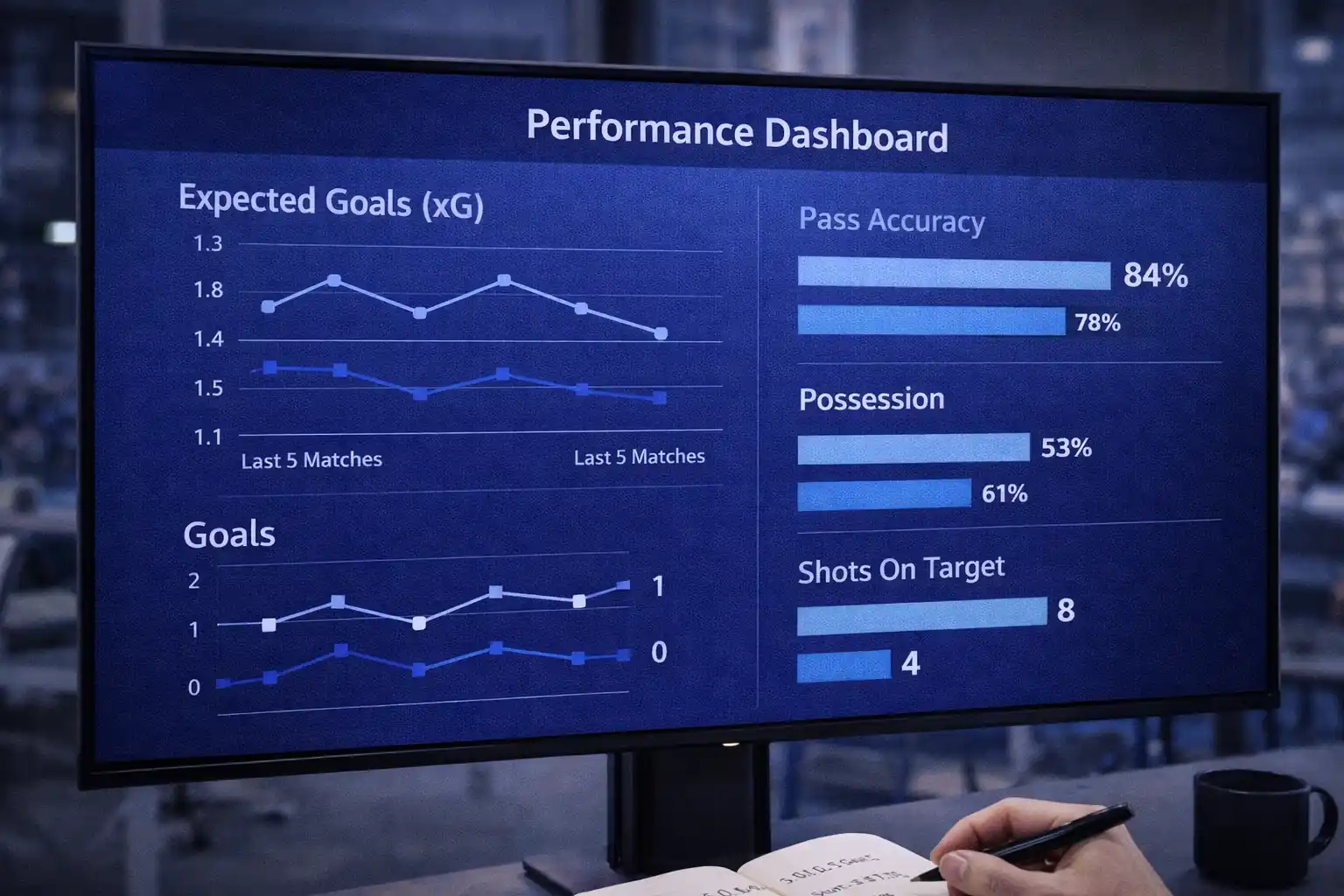
Moving beyond results requires tracking quantitative metrics that predict future performance better than scorelines alone. Shot creation rate – how many chances Chelsea generate per match – indicates attacking fluency regardless of whether goals resulted. Defensive territorial control – where on the pitch opponents receive the ball – reveals structural soundness that clean sheet probability depends upon. These metrics fluctuate less than goals, providing stabler form indicators.
Expected points calculations offer superior form assessment than actual points. If Chelsea generated enough chances to win their last five matches but collected only seven points from fifteen available, the expected points model reveals underlying form that results obscure. Bookmakers often overweight actual points, creating value when xPoints diverge significantly from reality. A team collecting fewer points than their performances deserve represents buying opportunity; overperforming teams deserve skepticism.
Progressive passing data indicates creative form with particular clarity. Chelsea’s ability to move the ball into dangerous areas precedes goal creation, and tracking progressive passes per match shows whether their attacking machine is functioning even when goals don’t materialize. When progressive passing numbers remain strong despite goal droughts, regression toward scoring typically follows. Declining progressive passing combined with maintained goal output signals the opposite – a team riding luck that will eventually run out.
Pressing effectiveness metrics round out quantitative form assessment. Chelsea under Maresca employ specific pressing patterns, and tracking their success rate in winning possession high up the pitch reveals whether their system is functioning. Strong pressing numbers typically predict clean sheets and limited opponent chances; declining pressing effectiveness often precedes defensive difficulties. These leading indicators frequently flash warning signs before results deteriorate.
Recognizing Betting-Relevant Form Transitions
Form transitions – the moments when good form turns bad or struggling teams find their rhythm – present the most profitable betting opportunities. Identifying these inflection points before the market adjusts odds generates sustained edge. Chelsea’s seasonal form transitions often follow identifiable patterns: post-international break adjustments, new signing integration periods, injury disruption and recovery phases, and late-season motivation fluctuations.
International breaks consistently disrupt Chelsea’s rhythm given their heavily internationalized squad. Players return from national team duty at varying fitness levels, having played different tactical systems under different coaches. The first match after international breaks historically shows elevated variance for Chelsea, creating opportunities in certain markets while warning against others. Tracking Chelsea’s post-break record and adjusting expectations accordingly provides systematic edge.
The distinction between results-based form and performance-based form matters enormously at transition points. When Chelsea’s performances remain strong despite poor results, patient bettors recognize the impending correction. When results mask declining performances, skeptics identify vulnerability before the market does. The gap between results and performances creates arbitrage opportunities that close once regression occurs – capturing these windows requires monitoring both dimensions continuously.
Key player absences trigger form transitions that betting markets sometimes misjudge. Cole Palmer’s availability dramatically affects Chelsea’s expected output; his absence historically correlates with reduced chance creation and lower xG generation. When injury news breaks, initial market movements often overreact or underreact depending on circumstances. Having pre-established views on Chelsea’s Palmer-less expected output allows rapid position-taking when news drops.
Building Form-Based Betting Systems

Systematic form betting requires consistent methodology applied across fixtures. Establish baseline metrics for Chelsea in strong, average, and poor form. Define the thresholds that trigger form category changes. Identify which markets respond most predictably to form classifications. Then apply this framework mechanically, removing emotional assessment that clouds judgment.
Timing matters considerably in form-based betting. Markets become more efficient as match time approaches and more information becomes available. Form advantages that existed when lines opened may disappear by kickoff as sharp money moves prices. Decide whether your form analysis targets early lines (where information edges exist but liquidity is limited) or kickoff prices (where lines are efficient but sometimes overreact to late news). Both approaches work; mixing them incoherently does not.
Form betting works best when combined with other analytical dimensions. Use form analysis to establish directional views – Chelsea are performing above/below their baseline – then seek confirmation from other factors before placing wagers. When form analysis, xG indicators, and situational factors align, position sizes can increase. When different analytical lenses contradict each other, caution is warranted regardless of how clear any single signal appears.
Record your form assessments and their betting outcomes. Over months, patterns emerge showing which form indicators actually predict betting results and which merely seem predictive. This feedback loop refines your form analysis framework, gradually improving its accuracy and your bottom line. Form analysis without outcome tracking is astrology; form analysis with rigorous tracking becomes genuine edge identification.
After reviewing Chelsea form analysis for betting and understanding how recent performances should be weighted before placing a wager, readers can return to chelseabetexpert to continue refining pre-match evaluation methods.
If someone wants to connect recent form with a data model that captures performance quality beyond results alone, the best next page is Chelsea expected goals xG betting.