
Chelsea Fixture Congestion Betting Markets
 Available in US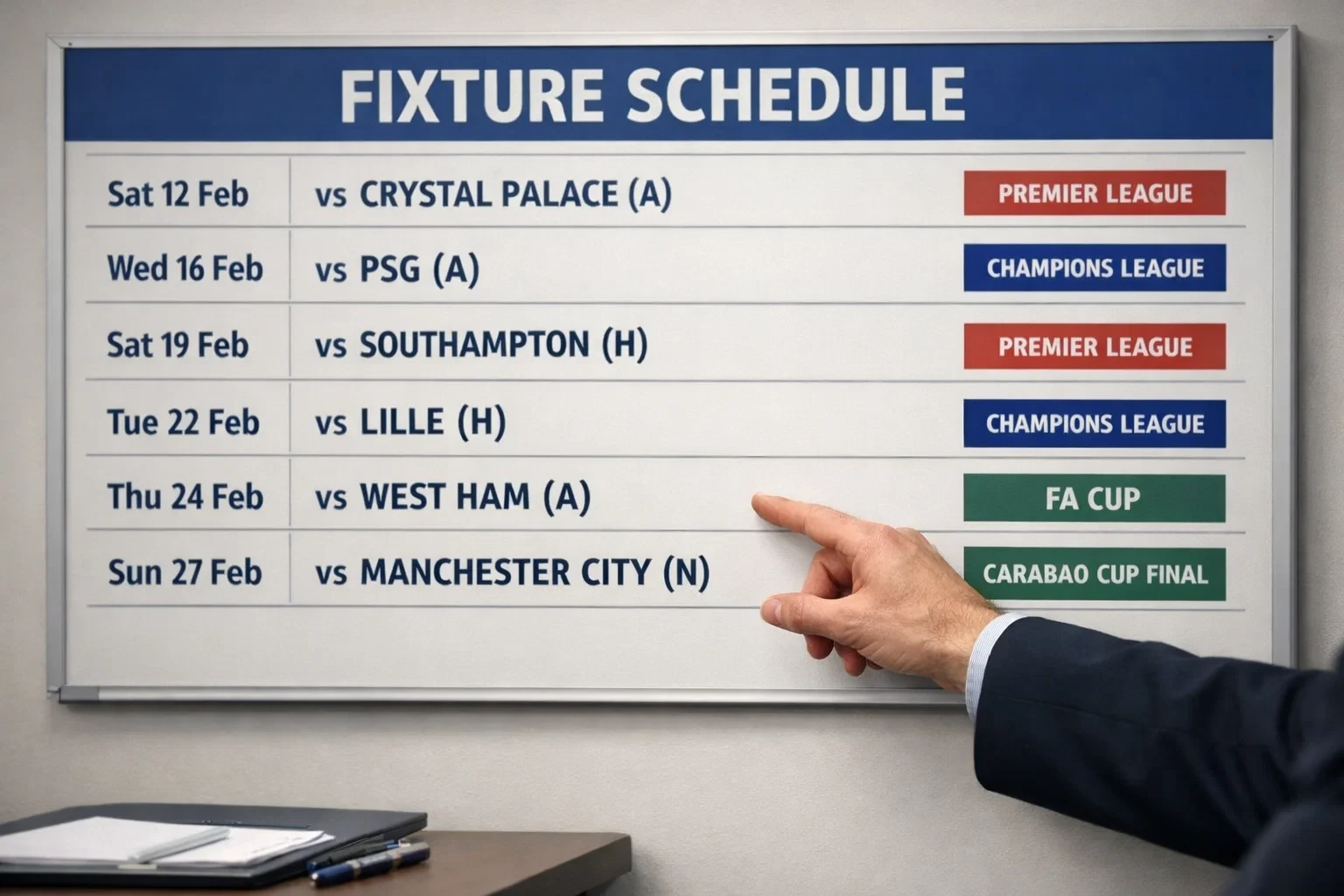
Fixture congestion represents one of football’s most underappreciated betting variables. When Chelsea compete across Premier League, Champions League, FA Cup, and Carabao Cup simultaneously, the compressed schedule creates performance fluctuations that bookmakers struggle to price accurately. Understanding how congestion affects Chelsea’s output enables systematic betting approaches that exploit these pricing inefficiencies.
The 2024-25 season provided Chelsea with extensive experience managing congestion, as their Conference League campaign, domestic cup runs, and league fixtures created periods where matches arrived every three or four days for weeks at a time. The club used a record 39 different players across all competitions, illustrating Enzo Maresca’s rotation philosophy that both responds to and creates betting opportunities.
Table of Contents
Defining Fixture Congestion
Sports science research defines fixture congestion as two or more successive matches with less than 96 hours recovery time between them. This threshold marks the point where physiological recovery becomes incomplete, potentially affecting subsequent performance. For betting purposes, this means any match occurring within four days of a previous competitive fixture deserves congestion consideration.
The effects compound across extended congested periods. A single match after three days recovery may produce minimal performance decline, but the fourth or fifth match in a compressed sequence often shows accumulated fatigue effects. Chelsea’s December and January schedules typically feature these extended congested sequences that create measurable betting opportunities.
Not all congestion affects teams equally. Chelsea’s squad depth, one of the Premier League’s largest, provides rotation options that theoretically minimize individual player fatigue. However, rotation itself creates cohesion issues when players lack consistent minutes together. This trade-off between fresh legs and tactical understanding affects betting calculations.
Performance Patterns During Congestion

Research across elite football leagues reveals consistent patterns during congested periods that inform Chelsea betting. Total distance covered typically remains stable as players unconsciously adopt pacing strategies, but high-intensity actions decrease as accumulated fatigue limits explosive movements. This manifests as slower transitions, reduced pressing intensity, and fewer sprint efforts.
Defensive organization often suffers more than attacking output during congestion. Central defenders particularly experience congestion effects because rotation in these positions proves most disruptive to partnership cohesion. Chelsea’s defensive record may deteriorate during congested periods even when forward areas maintain productivity through rotation.
Mental fatigue accompanies physical tiredness in ways that affect decision-making. Players process information more slowly, react later to developing situations, and make poorer choices under pressure. For Chelsea, whose young squad lacks experience managing these demands, mental fatigue effects may exceed those observed in more seasoned teams.
Injury rates increase during congested periods, with muscle injuries and soft tissue damage becoming more common. This affects betting calculations because key player availability becomes less predictable. A Chelsea team entering congested periods with full availability may emerge with significant absences that alter subsequent fixture prospects.
Betting Adjustments for Congested Periods
Match result betting during congestion requires acknowledging reduced home advantage. The stamina and intensity that typically amplify Stamford Bridge’s effects diminish when players arrive fatigued from midweek fixtures. Consider adjusting Chelsea home expectations downward during congested sequences.
Goal markets often shift toward under selections during congestion. The reduced high-intensity activity that research documents translates into fewer explosive attacking movements, fewer pressing recoveries, and more conservative approaches from both teams. Under 2.5 goals becomes more attractive when both teams face congestion effects.
First-half markets deserve particular attention during congestion. Research suggests that match intensity remains highest in early periods before fatigue effects accumulate. Backing first-half goals or first-half results may capture value that full-match markets obscure.
Card markets may increase during congestion as tired players make mistimed challenges and frustrated reactions to lost physical battles. Chelsea’s already high card accumulation rate may accelerate during congested periods, creating over booking points value.
Rotation Prediction and Its Implications
Predicting Chelsea’s rotation patterns enables betting advantages when lineups reveal significant changes from expected selections. Maresca’s rotation philosophy provides consistent patterns that attentive bettors can anticipate.
Attacking players rotate more frequently than defenders during congestion because their position-specific demands prove most exhausting and because attacking partnerships adapt more quickly than defensive units. Expect Cole Palmer usage management during congested periods, with substitute appearances or complete rest replacing some starts.
European fixture context strongly influences domestic lineup decisions. Following demanding Champions League away trips, expect significant Chelsea rotation in subsequent Premier League fixtures. The reverse pattern often sees stronger domestic lineups when European fixtures allow recovery time.
Cup competition prioritization creates exploitable patterns. Chelsea typically rotate heavily in early Carabao Cup rounds regardless of congestion levels, while FA Cup fixtures receive variable treatment based on perceived trophy importance. Identify which competitions Maresca prioritizes and adjust rotation expectations accordingly.
Opposition Congestion Analysis
Chelsea’s congestion matters, but so does their opponent’s schedule. When Chelsea face similarly congested opposition, the playing field levels and match dynamics change from non-congested scenarios. Two tired teams produce different outcomes than one tired team facing a fresh opponent.
European competition creates asymmetries worth tracking. When Chelsea face Champions League opponents in Premier League fixtures, both teams carry comparable fatigue burdens. When Chelsea’s European commitment exceeds their opponent’s, the Blues may enter matches at disadvantage.
International breaks provide recovery opportunities that reset congestion calculations. The first fixture after international breaks typically features fresher squads, though international travel may affect specific players differently.
Seasonal Congestion Patterns
The Premier League calendar creates predictable congestion peaks that inform betting planning. December and January feature the most compressed schedules, with matches frequently arriving every three days across multiple competitions. This period deserves the most aggressive congestion-based betting adjustments.
Spring fixture pile-ups affect teams still competing across competitions. Chelsea’s deep runs in cup competitions create schedule compression that may affect late-season league form. Track Chelsea’s remaining fixture count across competitions to anticipate congestion effects.
Early-season congestion affects teams differently than mid-season compression. Players entering autumn congestion from pre-season preparation may handle demands better than players approaching spring congestion with accumulated seasonal fatigue.
Practical Application Framework

Develop a congestion calendar at the start of each season that identifies Chelsea’s most compressed periods. Mark fixtures occurring within 96 hours of previous matches and note the cumulative match load across multi-week sequences. This calendar informs stake allocation decisions throughout the season.
Create congestion-adjusted ratings that modify Chelsea’s expected performance based on schedule density. A Chelsea team rated as +5 goal difference expected in standard conditions might become +3 in moderate congestion and +1 in severe congestion. These adjustments inform both match result and goal market selections.
Cross-reference congestion periods with other variables like venue, opponent quality, and competition importance. The interaction effects between congestion and these factors often matter more than congestion alone. A congested Chelsea at Stamford Bridge against a relegation candidate presents different calculations than congested Chelsea away at a top-four rival.
After reviewing the impact of fixture congestion on Chelsea betting outcomes and understanding how schedule pressure changes performance expectations, readers can return to chelseabetexpert to keep exploring hidden contextual edges.
If someone wants to connect schedule stress with lineup and availability concerns that often drive pre-match value, the best follow-up article is UCL team news as a model of squad-context analysis, but since only listed URLs should be used here, the most relevant listed page is Chelsea form analysis for betting.